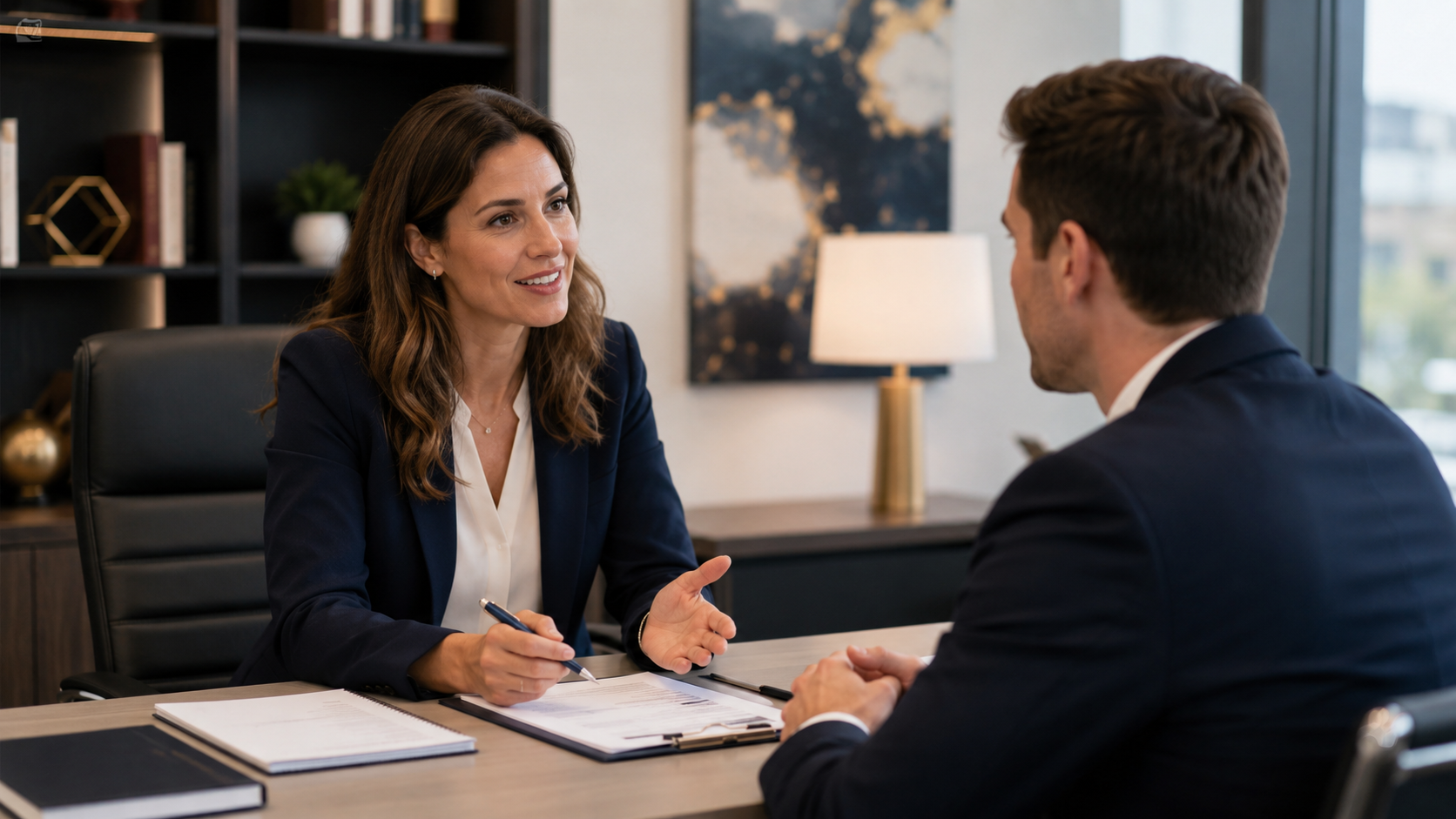
Professional Interview Coaching
Professional Interview Coaching for Managers and Executives
The Interview Is Scheduled. Are You Ready to Make Your Case?
You have the experience. You have the qualifications. Your resume has earned the employer's attention.
Now comes the opportunity to demonstrate the professional behind those accomplishments.
At Travis Koehler Writing, LLC, I provide personalized interview coaching that helps managers, directors, senior professionals, and executives communicate their experience with greater clarity, confidence, and purpose.
Whether you are preparing for an important interview, pursuing a leadership position, or struggling to communicate your accomplishments effectively, professional interview preparation can help you make a stronger impression.
Individual Interview Coaching - $99 Per Session
Three-Session Interview Coaching Package - $297
Employers Already Know What You've Done. Now They Want to Know How You Think.
An interview is rarely just a conversation about your employment history. It is an opportunity for an employer to evaluate your judgment, communication skills, professional maturity, and ability to translate experience into results. This distinction becomes especially important as you advance into management and executive positions. A hiring manager may ask how you handled an underperforming team, resolved a major business challenge, managed organizational change, or made a difficult decision with incomplete information.
The quality of your response depends on more than recalling what happened. You need to establish the situation, explain your contribution, show your reasoning, and communicate the outcome in a way that matters to the opportunity.
Consider a common interview question:
"Tell me about a time you led a team through a difficult change."
An unprepared response might describe the circumstances broadly, with little emphasis on the candidate's actions or results. A stronger response explains the challenge, the decisions made, how employees were engaged, and what changed as a result. That is the foundation of effective interview coaching: turning real professional experiences into clear, credible examples that demonstrate your qualifications.
Prepare for the Questions That Reveal Your Professional Value.
Every interview presents different challenges. My coaching approach is tailored to your experience, career objectives, and the type of opportunity you are pursuing.
Behavioral and Situational Interview Preparation
Questions about conflict, leadership, problem-solving, accountability, and difficult decisions require more than general statements about your abilities. Using established techniques such as STAR (Situation, Task, Action, Result) and CAR (Challenge, Action, Result), we organize relevant career experiences into focused responses that demonstrate what you personally contributed and why it mattered.
The goal isn’t to memorize scripts. The goal is to become familiar with your strongest professional examples so you can communicate them naturally.
Management and Executive Interview Preparation
Interviews for management and executive positions often explore broader organizational responsibilities, including strategic planning, financial performance, leadership judgment, stakeholder relationships, and managing through change. For these opportunities, coaching focuses on how you communicate your scope of responsibility, decision-making approach, leadership effectiveness, and business impact.
Your answers should reflect the level at which you are seeking to operate, not simply the responsibilities of previous positions.
Challenging Questions and Career Transitions
Some of the most difficult interview questions concern uncomfortable or complex circumstances. Employment gaps, unexpected departures, career changes, limited industry experience, previous failures, and compensation expectations can all require thoughtful preparation.
Together, we develop direct, professional responses that provide appropriate context without becoming defensive, evasive, or unnecessarily detailed.
Communication, Confidence, and Interview Practice
Even well-qualified professionals can struggle with overly lengthy answers, unclear examples, nervous delivery, or difficulty responding to unexpected questions. Through individualized practice and constructive feedback, we strengthen your professional introduction, improve response structure, help you communicate more concisely, and build your confidence.
We can adapt preparation for traditional interviews, virtual interviews, panel discussions, and specific upcoming opportunities.
Your goal is not to sound rehearsed. It is to communicate your experience with confidence and authenticity.
Choose the Preparation That Fits Your Needs.
Individual Interview Coaching — $99
Focused Preparation for a Specific Challenge or Upcoming Interview
A single coaching session is appropriate when you have an interview approaching or want to strengthen a particular aspect of your interview performance. We can focus on your professional introduction, behavioral questions, leadership examples, difficult career questions, or preparation for a specific employer and position.
The session is individualized so we can focus on what matters most right now.
Investment: $99 Per Session
Three-Session Interview Coaching Package — $297
A More Comprehensive Approach to Interview Readiness
For professionals seeking broader preparation, three sessions give you time to develop, practice, and refine your interview strategy.
Session One — Establish Your Interview Strategy
We review your career objectives, target positions, professional introduction, and strongest accomplishment stories. We focus on identifying the evidence that best supports your qualifications.
Session Two — Develop Stronger Responses
We work through behavioral, situational, leadership, and difficult interview questions. Coaching focuses on response structure, professional judgment, and clearly communicating relevant experience
.
Session Three — Practice and Refine
We apply your preparation through realistic interview questions, targeted practice, and constructive feedback. When appropriate, this session can focus on a specific upcoming opportunity. We adapt the sessions to your needs rather than following a rigid, standardized script.
Three-Session Package: $297
You Don't Have to Wait Until an Interview Goes Poorly to Prepare.
Some professionals seek interview coaching after several interviews that did not result in offers. Others realize their experience has grown beyond what they can discuss comfortably in a formal interview. Many simply want an experienced professional to challenge their answers, identify weaknesses in their presentation, and provide objective feedback before an important conversation.
Interview coaching can be especially valuable when you're preparing for your first management role, moving into executive leadership, changing industries, returning to the workforce, or interviewing for a position with substantially greater responsibility. It can also help professionals who haven’t interviewed in several years. The process of explaining your accomplishments, evaluating your decisions, and responding to challenging questions becomes more effective with deliberate preparation.
An interview shouldn't be the first time you try to explain the experiences that qualify you for the position.
Guidance Informed by Corporate Leadership Experience.
Interview preparation benefits from an understanding of both professional communication and the business expectations behind hiring decisions.
With more than 20 years of corporate management experience, I bring practical knowledge of organizational leadership, performance expectations, decision-making, and professional accountability to the coaching process. As a Certified Interview Coach (CIC), Certified Professional Resume Writer (CPRW), and Certified Technical Writer, I combine structured interview preparation with professional communication strategies and individualized career guidance.
You work with me one-on-one in confidential coaching sessions tailored to your professional background and the opportunities you want to pursue. My responsibility is not to provide answers for you to memorize. It is to help you identify the strongest evidence of your qualifications and learn to communicate it effectively.
Learn more about Travis by clicking here.
Your Next Interview Deserves More Than Last-Minute Preparation.
When an employer invites you to interview, you can move beyond the qualifications listed on your resume and demonstrate the judgment, experience, and professional strengths behind them. The preparation you invest in that conversation can help you approach difficult questions more confidently, present relevant accomplishments more clearly, and communicate at the level expected of the position you are pursuing.
Whether you need focused preparation for a specific interview or a more comprehensive coaching strategy, I welcome the opportunity to discuss your goals.
Professional Interview Coaching — $99 Per Session
Three-Session Package — $297